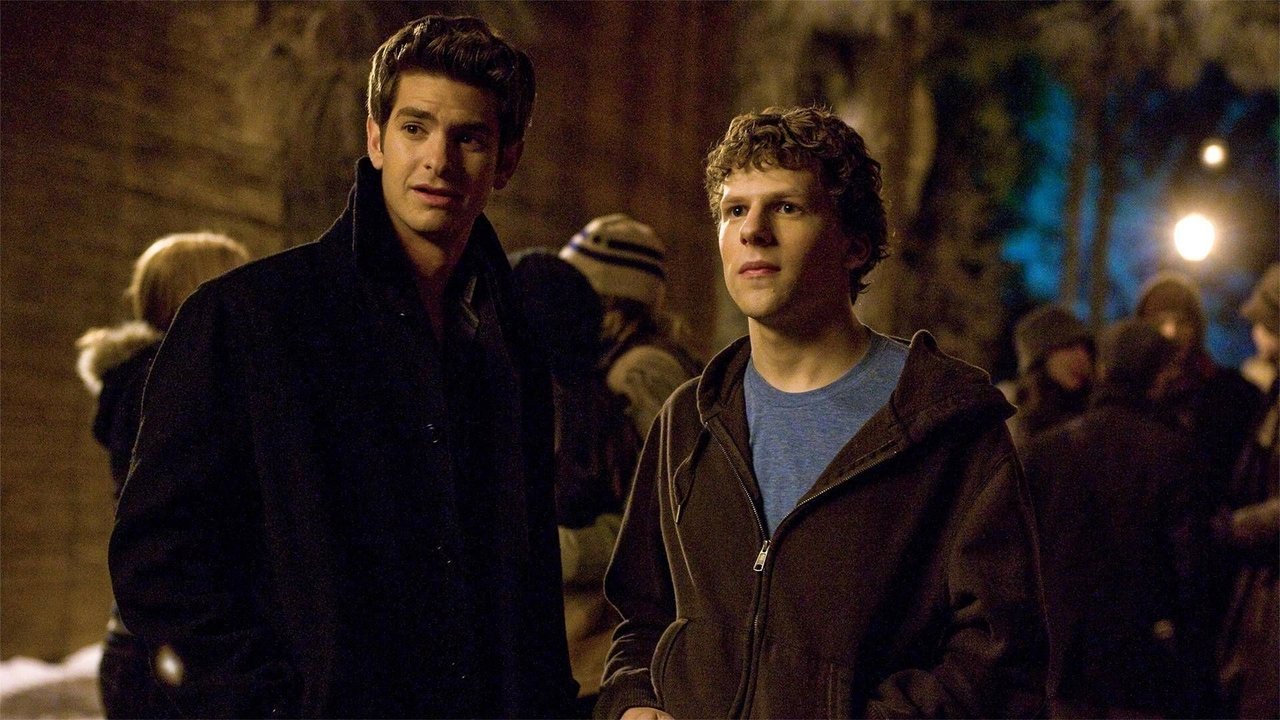

feature · 20102h 1mUS
The Social Network
In 2003, Harvard undergrad and computer programmer Mark Zuckerberg begins work on a new concept that eventually turns into the global social network known as Facebook. Six years later, Mark is one of the youngest billionaires ever, but his unprecedented success leads to both personal and legal complications when he ends up on the receiving end of two lawsuits, one involving his former friend.
Verified
At a glance
- Director
- David Fincher
- Cinematography
- Jeff Cronenweth
- Editor
- Angus Wall
- Music
- Atticus Ross
- Costume
- Jacqueline West
- Primary camera
- RED One MX (Mysterium-X)2 scenes
- Format
- 2.39:1 · RED One MX (primary)Digital primary
- Locations
- Thames, UK
Production
Studios
- Columbia Picturesdistributor
Department
Camera
- Jeff CronenwethDirector of Photographyprimary
- Peter RosenfeldCamera Operatorprimary
Department
Electric / Lighting
- Chris WeigandLamp Operatorprimary
- Harold SkinnerGafferprimary
Department
Sound
- David RaymondBoom Operatorprimary
- Tom WilliamsProduction Sound Mixerprimary
Recognition by craft
- Cinematography2n
- +3 non-craft
Recognition
Awards (2 won, 5 total)
- Status: WONAcademy AwardBest Adapted Screenplay2011Aaron SorkinCited source (opens in new tab): [src]
- Status: WONAcademy AwardBest Adapted Screenplay2011Cited source (opens in new tab): [src]
- NOM
Stunts
1 crew
The stunt department on this production: credited crew, actor-double pairings, and the companies whose members brought them onto the show. Click any name to jump to their full filmography + doubling history.
Department
Score
Composer & cues
- Atticus Rossat Reznor/Ross home studios
Co-composer with Trent Reznor. Long-time NIN collaborator.
- Trent Reznorat Reznor/Ross home studios
Academy Award winner for Best Original Score (2011). First feature score collaboration for Reznor/Ross.
Production
Videos


Production
Scenes & Equipment
Thames, UK
Related
Similar productions
Ranked by overlap of director, cinematographer, genre, and decade.



Related
Thematically similar
By embedding cosine-similarity — surfaces films with comparable subject matter and tone, regardless of whether crew credits overlap.