The Brutalist (2024) — Cameras, Lenses & Crew | CineCanon
feature · 20243h 35mGB
The Brutalist
When an innovative modern architect flees post-war Europe, he is given the opportunity to rebuild his legacy. Set during the dawn of the modern United States (in Pennsylvania), his wife joins him, and their lives are forever changed by a demanding, wealthy patron.
Primary production base — Brady Corbet + Mona Fastvold relocated to Budapest for principal photography. Multiple Budapest neighbourhoods doubled for 1947-1980s Philadelphia exteriors.
Sole non-Hungary location — the Carrara marble quarry sequence (the film's most-photographed visual set-piece). Two-week shooting block in the open quarry pits.
Country-estate location doubling for the Van Buren mansion in Doylestown, Pennsylvania. The mansion + grounds + period-correct interiors for the Van Buren commission.
Civil dawn
04:11 UTC
Sunrise
04:41 UTC
Magic-hour AM
04:41 UTC → 05:22 UTC
Magic-hour PM
15:43 UTC → 16:24 UTC
Sunset
16:24 UTC
Civil dusk
16:54 UTC
Hungary — Institute Construction Set
Studio
Pest County · Hungary · 47.500, 19.400
Purpose-built Institute construction set — the production's most expensive single set-piece. Multiple shooting blocks across the schedule for the Institute under construction sequences + the climactic completion reveal.
Per-scene lighting plots: fixture role (key / fill / back / practical), color temperature, diffusion stack, and motivation notes from cited supervisor interviews.
Philadelphia arrival — vertical-camera VistaVision
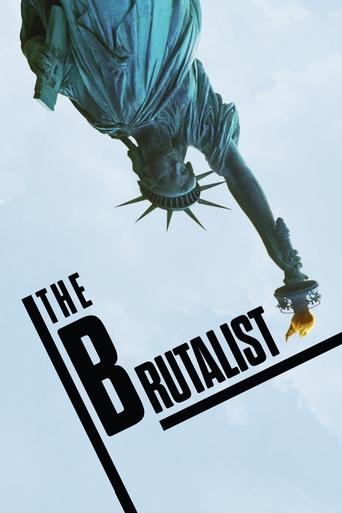
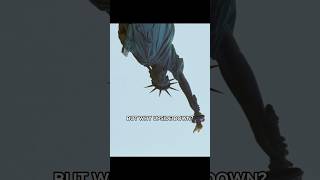
Crawley's opening choice: VistaVision rig mounted vertically so the 8-perf frame reads at portrait orientation. The Statue of Liberty seen inverted from László's upward-tilted perspective — a deliberate perceptual subversion of the immigrant cliché. Practical morning sun + the Danube's reflection providing the entire lighting plot.
Setup defined; no fixtures plotted yet.
Budapest Danube doubled for Philadelphia's Delaware River. The vertical VistaVision rig was a custom-built mount engineered to handle the 8-perf format's film-transport mechanism in a non-horizontal orientation — likely a first-of-its-kind in the format's 70-year history.
Van Buren mansion — natural sunlight + practical fixtures
Crawley shot the Van Buren mansion interiors with natural sunlight through period-correct windows + practical period-correct chandelier fixtures. The Brody / Pearce performance dynamics required the actors to walk through the entire mansion's spatial geometry without breaking character; Crawley's wide VistaVision frame held the entire room at f/2.8 base ratings.
Setup defined; no fixtures plotted yet.
Hungary country-estate location doubled for Pennsylvania. Sun-only daylight rated at base 200 ISO equivalent for VistaVision; dim-spec interior practicals supplemented at 4-stop fall-off ratings.
Practical Carrara quarry photography in Tuscany — Crawley shot in the open marble pits with no movie lighting at any point in the sequence. The reflective marble surfaces themselves act as an enormous bounce-card, kicking sun light back into the shadow side of every figure in frame.
Setup defined; no fixtures plotted yet.
Two-week Carrara block. Practical safety considerations limited the working window to mid-morning (when the sun cleared the quarry walls) through early afternoon (before the marble heat made the working surfaces dangerous).
Crawley shot the climactic Institute reveal at golden hour with the VistaVision rig at maximum width. The Institute's brutalist concrete geometry filled the entire VistaVision aperture; László's figure deliberately small in frame at 1/24 of the frame width to emphasise scale.
Setup defined; no fixtures plotted yet.
Purpose-built Institute construction set in Hungary; the production's most expensive single set-piece. Magic-hour shoot window across 5 consecutive days to bank coverage in the consistent light decay.
Color
Pipeline
Camera color science → IDT → working space → ODT → deliverable. Production-wide default first; scenes that diverge below.
VistaVision 8-perf 35mm + 8K scan → FotoKem DI (Máté Nagy colorist)· production default
Lol Crawley + Brady Corbet specified VistaVision negative for the project — the 8-perf 35mm format had not been used for a major narrative feature since Marlon Brando's One-Eyed Jacks in 1961, a 63-year gap. Máté Nagy at FotoKem handled the DI, originally brought on as dailies colourist before the relationship deepened during pre-production camera tests. The 70mm presentation print pass was a deliberate exhibition-format choice, with first-run venues equipped for 70mm projection screening the photochemical contact-print version. Daniel Blumberg's Best-Original-Score-winning soundtrack mixed at FotoKem's adjacent sound facility.
Stunts
1 crew
The stunt department on this production: credited crew, actor-double pairings, and the companies whose members brought them onto the show. Click any name to jump to their full filmography + doubling history.
FotoKemdi ↗— Máté Nagy colorist. Originally brought on as dailies colourist before the relationship deepened during pre-production camera tests; FotoKem became the film's primary DI partner. The 8K VistaVision negative scans were processed at FotoKem with a custom IDT for the 8-perf format.
FotoKemfinishing ↗— 70mm 5-perf contact-print pass for first-run 70mm presentation venues. Photochemical answer-print continuity matched against the digital DI for the Dolby Vision + Rec.709 deliverables.
Score
Composer & cues
Daniel Blumberg· Various session players (UK + Hungary)at Multiple studios; some Hungarian sessions tied to production location
Won Academy Award for Best Original Score (2025). Blumberg's first feature score; previously known as singer-songwriter (Yuck, Hebronix).